Where Korea slows down: the stay-time map
4 min read · every number from 한국관광 데이터랩
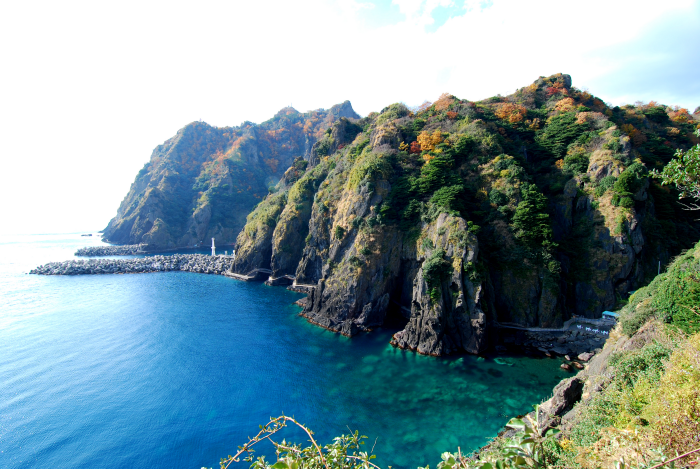
![Elephant Rock [Ulleungdo-Dokdo National Geopark] (코끼리바위 (울릉도, 독도 국가지질공원))](/_next/image?url=https%3A%2F%2Ftong.visitkorea.or.kr%2Fcms%2Fresource%2F79%2F2499379_image2_1.jpg&w=3840&q=75)
The Data Lab tracks something subtle and wonderful: how long visitors actually remain in each of Korea's 229 districts. Most tourism is measured in headcounts; this metric measures the opposite — the places that hold people. A long average stay is the signature of a destination, not a photo stop.
75h
average visit in 울릉군 (경상북도)
40h
average visit in 제주시 (제주특별자치도)
40h
average visit in 거제시 (경상남도)
The pattern
The top of the list is islands and far coasts. 울릉군 — Ulleungdo, the volcanic island a three-hour ferry into the East Sea — holds visitors an average of 75 hours, the longest in the country, for the simple reason that nobody makes that crossing for an afternoon. Behind it come shipbuilding-coast towns like Geoje, slow southern harbors like Jinju and Tongyeong, and inland mountain counties.
How to use it
Flip your itinerary logic. Instead of asking “what can I see in a day,” pick one high-stay district and give it a night or two — that's what Koreans who know these places do. The full top twenty is on Slow stays, and Tongyeong — the one slow town we've profiled attraction-by-attraction — has its own quiet guide.